
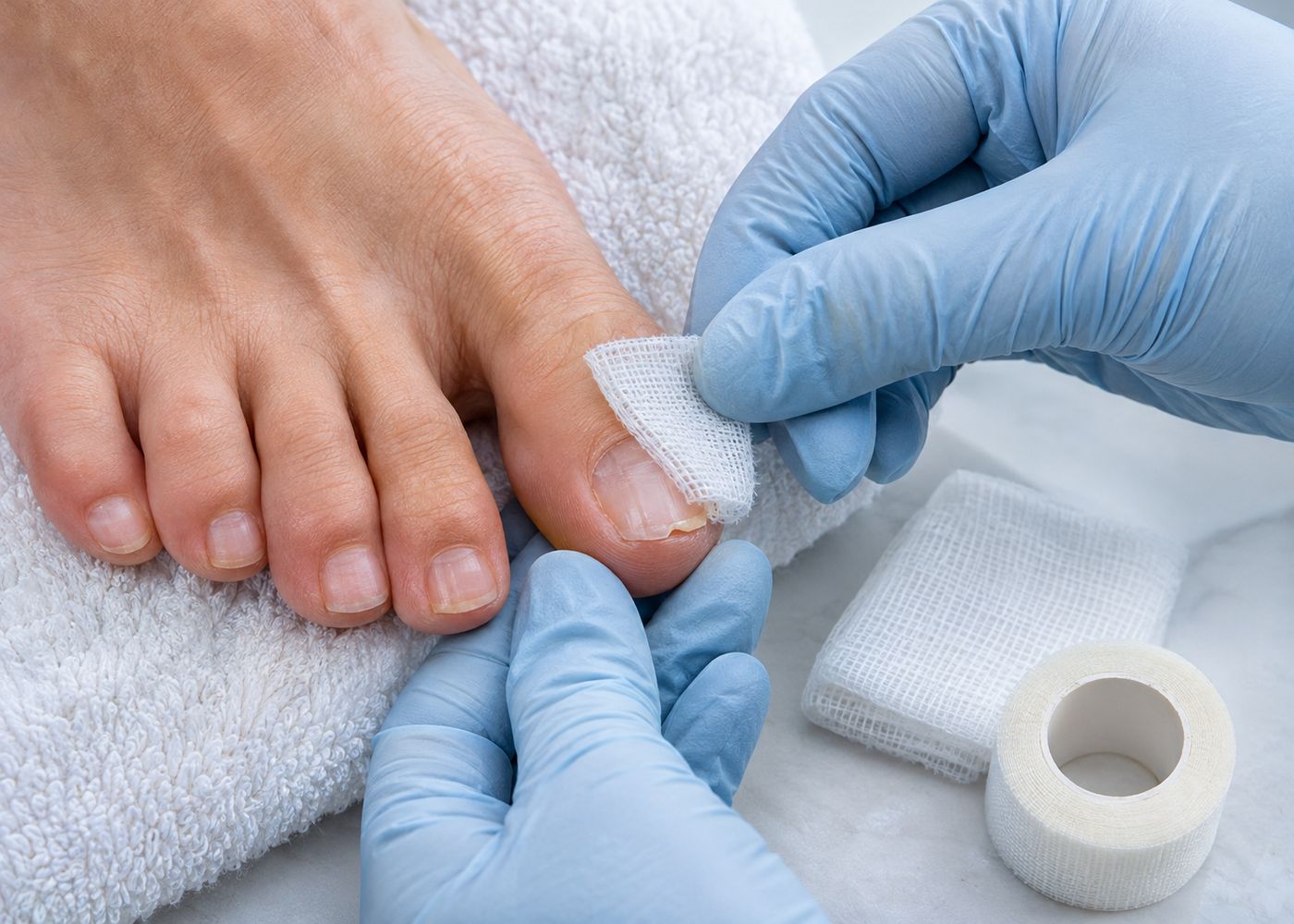
A small broken toe nail can usually be handled at home: stop any bleeding, trim only the piece that is already loose, then protect the area with petroleum jelly and a non-stick dressing. A deep tear, a nail that is partly ripped away with heavy bleeding, or a crushed toe that throbs badly needs a medical check instead.
The steps below follow the order you will need them.
Before you start, gather:
- A clean cloth, gauze or bandage
- Soap and running water
- Clean, sharp nail clippers or small scissors, plus a nail file
- Petroleum jelly
- Non-stick bandages and medical tape
- An ice pack or bag of ice wrapped in a thin cloth
First, work out what kind of injury it is
A nail injury can damage the nail itself, the nail bed underneath, the cuticle or the skin along the sides, so the size of the crack does not tell you how serious it is. Look closely and decide which of these fits best:
- A small broken edge. The tip of the nail has cracked or snapped, but the skin is fine. This is the easiest case to treat at home.
- A split or torn toenail. The crack runs down into the part of the nail still attached to skin. It may bleed and sting.
- A partially detached toenail. Part of the nail has lifted or torn away from the bed. Doctors call this a nail avulsion.
- A crush injury. Something heavy landed on the toe, or you stubbed it hard. The nail may turn dark and throb.
Go to emergency care if the bleeding will not stop, the wound is very deep or large, you lose feeling, you cannot move the toe properly, or something is stuck in the wound.
Some people should skip home trimming altogether. If you have diabetes, peripheral arterial disease or a weak immune system, let a clinician trim an injured or detached nail. Diabetes can also reduce feeling in the feet, so a lack of pain does not prove the injury is minor.
Stop the bleeding and clean the toe
Wash and dry your hands first. If nothing is embedded in the wound, press a clean folded cloth or bandage firmly on the toe. If blood soaks through, do not lift the first layer to check. Add another layer on top and keep pressing, because pulling the cloth away can restart the bleeding.
Once the bleeding stops, rinse the toe under running water and wash the skin around it with soap. If you cannot get dirt or grit out, get medical help. Skip hydrogen peroxide and iodine on the open area, since both can irritate a raw wound.
Trim only the part that is already loose
This is where people most often go wrong. The safe rule from the American Academy of Dermatology's guide to injured nails is simple: trim only the portion of nail that is no longer connected to the skin.
That means you do not remove the whole toenail when only part of it has come off. Never rip off a loose nail or cut through any part that is still attached, because that tears the living tissue underneath.
If your toenail is split halfway down but still attached, do not cut along the split. Snip away any hanging bit that is free from the skin, then gently file the sharp corners smooth. A smooth edge is far less likely to catch on socks and bedding and tear further.
What about glue, superglue or a tea-bag patch?
These ideas come up often online, but they are cosmetic repairs, not wound care. Do not use nail glue, household superglue, acrylics or tea-bag patches on a nail that is bleeding, open or lifting from the bed, because they can trap dirt against an injury that needs to stay clean and visible.
If an acrylic or other artificial nail has lifted your natural nail and caused bleeding, treat the bleeding first. Then ask a clinician whether the enhancement should come off, rather than prying it off yourself.
Cover the nail bed so the dressing does not stick
Spread a thin layer of petroleum jelly over the exposed area, then cover it with a non-stick bandage. The jelly keeps the wound moist and stops dry gauze from gluing itself to the damaged nail bed. Put the adhesive or tape on the surrounding skin, not on the injured nail, and do not wrap the toe tightly.
Change the dressing at least once a day, and any time it gets wet or dirty. If it sticks, soak it briefly with warm water until it loosens instead of tearing it off dry.
You may have read that antibiotic ointment is a must. For a clean minor wound, it is not needed and can irritate the skin, so petroleum jelly does the job. If a doctor prescribes something for a more complicated injury, follow that prescription.
Ease the pain and swelling
On the first day, hold an ice pack wrapped in cloth on the toe for 20 minutes every two hours. After that, three or four times a day is enough. Resting with your foot raised above the level of your heart also helps with throbbing and swelling.
For medicine, ibuprofen or naproxen can reduce both pain and swelling. Acetaminophen, also called paracetamol, eases pain but does nothing for swelling. Stay within the label dose, and check with a clinician first if you have heart disease, high blood pressure, kidney disease, past stomach ulcers or internal bleeding.
Treat blood under the nail as its own problem
If your toenail turns black or purple and throbs, blood has probably pooled under the hard nail. This is called a subungual hematoma. The trapped blood creates pressure, which explains the severe throbbing, and it can even lift the nail.
Sources disagree on when to see a doctor. Some say when blood covers more than a quarter of the nail, others say more than half. How you feel matters more than the percentage: severe pain, a toe you cannot bend, or other damage all deserve a check, because a crushed toe can involve more than the nail.
A clinician can drain the blood through a tiny opening in the nail, which brings fast relief. It works best within 24 to 48 hours, so do not wait, although severe pain still needs attention after that window. Never drill, poke or burn a hole in the nail at home, because this can cause infection, more injury and slower healing.
A large dark area does not automatically mean the nail must come off. Doctors look for real structural damage, such as a displaced fracture or a badly disrupted nail fold. If the nail bed under a torn nail is cut, though, a doctor may remove part or all of the nail and stitch the tissue.
Plan carefully for showers, soaking and tetanus
Advice on soaking conflicts because it comes from different situations. Some general guides suggest cold or salt water soaks for a detached nail, while aftercare instructions following a medical procedure often say no soaking or swimming, and to keep stitches dry for the first 24 to 48 hours. If a clinician treated you, their instructions come first. For a minor home injury, soaking is optional.
Tetanus is easy to overlook. Under U.S. CDC guidance, people who completed their primary vaccine series need a booster for a clean minor wound if their last dose was 10 or more years ago. For dirty or major wounds, which include crush injuries and anything contaminated with soil, the gap is five years. If you do not know your history or never finished the series, get assessed. Antibiotics do not replace tetanus protection. Outside the U.S., follow your local recommendations.
Know how healing and regrowth differ
Two separate things are happening. The wound on the nail bed may heal within a few weeks, but the nail is another story. Once a nail separates from its bed, that piece will not stick back down, so a loose section will eventually fall off as new nail grows in behind it. A complete new toenail can take 12 to 18 months.
The new nail is not guaranteed to look normal. Severe damage to the matrix, the area that produces the nail, can permanently change its shape. You also do not need a dressing for the whole regrowth period. Once the bed has healed, keep covering it only as long as it needs protection or your clinician advises.
If toenails keep lifting without a clear injury, get them checked. Fungal infection, psoriasis, nail cosmetics, some medicines and serious illness can all cause separation. To lower the chance of another injury, keep nails short, wear shoes with a roomy toe box and use proper sports protection. Our guide to nail hygiene tips for healthy nails covers everyday care once things settle.
How to check that it is healing
Over the next few days, pain and swelling should slowly ease, and the area should look cleaner at each dressing change. Get prompt medical care if you notice:
- Pain, swelling, warmth or redness that is getting worse
- Pus
- Red streaks spreading from the toe
- Fever
If the toe is simply not looking or feeling better after a few days of home care, have it checked too. Steady improvement means your care is working.
If you wish to contribute to our blog, please email us on info@urlmagazine.com.